Punta Cana Cooking Classes Guide
A Punta Cana cooking class adds a hands-on taste of Dominican culture to a trip often centered on beaches and resorts. Available experiences include traditional Dominican and Taíno-oriented cooking, chocolate workshops, resort culinary sessions, and rural farm-to-table outings. The best choice depends less on a flashy menu description and more on location, transport, class size, total duration, and how much cooking you actually want to do.
- Choose the format first: full cooking class, chocolate workshop, resort session, or rural farm experience.
- Check whether the quoted price includes hotel pickup, return transport, taxes, ingredients, and tastings.
- Leave extra time around the advertised duration for transfers, shopping, browsing, or meals.
- Confirm dietary accommodations, allergen controls, mobility access, and restroom access before paying.
- Review the minimum age, cancellation deadline, meeting point, and weather procedure.
Cooking classes work best as a planned excursion or resort activity rather than a spontaneous city-center stop. Punta Cana is a large resort destination, and the distance between hotels, private rentals, Cap Cana, Bávaro, Uvero Alto, and activity venues can change the practical value of a booking. A convenient class close to your hotel can be a better fit than a cheaper option requiring a long or costly transfer.
How to choose the right Punta Cana cooking class
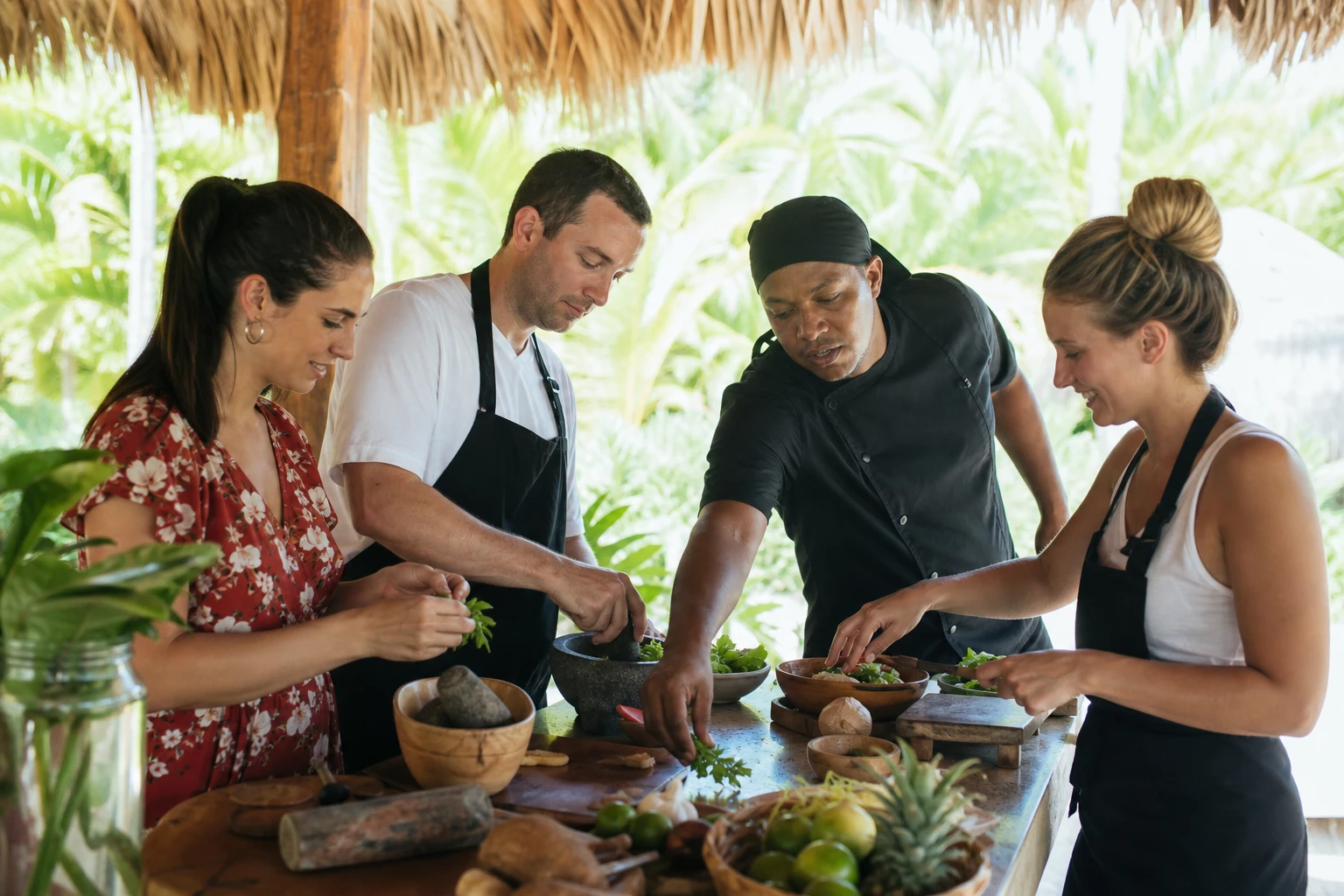
Start by deciding what you want to gain from the experience. A traditional class suits travelers interested in preparing a meal and learning cooking techniques. A short chocolate workshop offers a narrower theme and can fit more easily into a busy schedule. Resort classes emphasize convenience, while a farm-to-table outing trades extra travel time for a more rural setting.
Next, compare how active each class is. Product names do not always reveal whether guests prepare an entire dish, complete selected steps, watch a demonstration, or focus mainly on tasting. Read the activity sequence carefully. Look for clear information about preparation, instruction, cooking time, the meal or tasting, and any shopping stop included in the program.
Group size also shapes the experience, even when listings do not make it prominent. Ask whether the session is private or shared and how many people work at each station. This is especially useful for couples, families, and serious home cooks who want enough time with the instructor rather than a mostly observational session.
Cooking-class formats available around Punta Cana
Traditional Dominican and Taíno-oriented classes
These are the closest match for travelers seeking a complete culinary activity. Listings in the Punta Cana market include traditional Dominican and Taíno-oriented experiences, although the exact menu, teaching style, and amount of hands-on preparation vary. Confirm what you will cook and whether the finished food is served as a full meal or a smaller tasting.
Chocolate workshops
Chocolate workshops are generally more focused than meal-based classes. They can suit travelers who prefer a themed activity or who do not want to commit to a longer culinary excursion. Pay close attention to the itinerary, since browsing and store visits can extend the outing beyond the advertised workshop time.
Resort culinary sessions
Some resorts offer their own culinary experiences. Their central advantage is convenience, particularly when the session takes place where you are staying. Participation rules, menus, and availability depend on the property, so check with the resort before building the activity into your day. The Punta Cana All-Inclusive Resort Guide can help travelers compare the wider resort experience when choosing where to stay.

Punta Cana Buggy Tour + Macao Beach + Cave Swim + Organic Tasting
(We'll pick you up at your hotel) take you on an incredible experience driving your own buggy to a beautiful beach...

Saona Island Day Trip From Punta Cana with Lunch and Open Bar
Explore the remarkable Altos de Chavon and dig your toes in the sand of Saona Island during this full-day excursion...

Punta Cana Beach Horseback Riding
Good services for love to the animal our more 20 years experience en the area of Horsebackriding and tourism
Rural farm-to-table experiences
A farm experience near Miches illustrates the more immersive end of the market. It is described as roughly a 50-minute drive from central Punta Cana and includes about two hours of open-fire cooking. That setting can appeal to travelers seeking a countryside component, but the journey creates a longer overall commitment than the cooking time alone suggests.
Quick comparison of Punta Cana culinary experiences
| Format | Best suited to | Main planning question |
|---|---|---|
| Dominican or Taíno-oriented class | Travelers who want a meal-based cooking experience | How much of the food will guests prepare themselves? |
| Chocolate workshop | Visitors seeking a focused culinary activity | Does the schedule include browsing or a store visit? |
| Resort culinary session | Guests who value convenience | Is participation limited to resort guests or tied to a reservation? |
| Farm-to-table outing | Travelers interested in a rural setting and open-fire cooking | How much travel time is required in addition to the class? |
Travelers who would rather sample several foods than cook one menu can also compare the Best Punta Cana Food Tours. A food tour and a cooking class serve different purposes: one emphasizes tasting and movement between stops, while the other concentrates on instruction and preparation. The better choice depends on whether you want to explore or get behind a work surface.

What a class can include
Inclusions vary widely across Punta Cana cooking products. A booking can cover instruction, ingredients, cooking, tasting, a meal, transport, or time to browse related products. Do not assume that two activities with similar titles deliver the same sequence. The clearest listings explain each stage and identify which services cost extra.
Look for an itinerary that separates the class itself from transportation and optional stops. If a two-hour session also requires hotel collection, check-in, a meal, and the return drive, it will occupy much more than two hours of your day. This distinction matters when scheduling a spa appointment, dinner reservation, or another excursion afterward.
Treat the listed class length as the instructional time unless the product description clearly says that transfers and extra stops are included in the duration.
One traveler reviewing a chocolate master class reported that an activity advertised as 90 minutes took closer to three hours once time in stores was included. That is one person's experience rather than a standard schedule, but it shows why a generous buffer is useful.
Prices and what the advertised rate means
Cooking-class prices in Punta Cana vary sharply by format, duration, seller, group size, and transport arrangement. Marketplace category pages can display unusually low starting figures that do not represent a typical full class. Specific listings provide a more useful comparison, but even those rates can exclude transportation or apply only to a particular age group or shared format.
One direct operator currently advertises a two-hour shared Dominican cooking class at US$95 per person for guests aged 13 and older. Its booking process requires the guest's hotel to calculate an additional pickup charge, so the displayed amount should not be treated as an all-in price. Another marketplace example lists a chocolate experience from US$65.
A category page also advertises Punta Cana cooking classes from US$5, but that headline figure should not be used as a normal budget for a complete cooking session. Product type, promotions, inventory, and inclusions can differ. Compare the final checkout total rather than choosing solely by the lowest number shown on a category page.
- Instruction and ingredients
- Meal or tasting portions
- Shared or private format
- Hotel pickup and return transfer
- Taxes and booking charges
- Cancellation terms
Budget travelers can reduce surprises by comparing the complete outing cost, not only the class fee. A higher base rate with convenient transport can offer better value than a cheaper session with a separate transfer. The Punta Cana on a Budget Travel Guide provides a broader framework for balancing paid activities with the rest of a vacation budget.
Still comparing Punta Cana Cooking Classes?
Ask for tour ideas, hotel suggestions, or a simple trip plan that combines both.
Trip Helper
Transportation and pickup logistics
Hotel pickup and drop-off are available with some cooking classes, but they are not standard across every product. One listing includes hotel transfers, while another calculates pickup as an extra charge after the customer selects a hotel. Confirm both the outbound and return arrangements before booking.

Your accommodation area matters. Pickup coverage, timing, and supplements can differ for properties in Cap Cana, Uvero Alto, Bávaro, the main resort strip, and private rentals. Provide the exact property name or rental location during booking. If the activity uses a central meeting point, check how you will reach it and return afterward.
The practical guide to How to Get Around Punta Cana Without a Car is useful when comparing hotel pickup with taxis or other local transport. Avoid placing another fixed-time activity immediately after the class. Collection routes can involve multiple hotels, and the nominal lesson duration does not necessarily cover the complete trip.
- Enter the exact hotel or rental location during checkout.
- Check whether pickup costs extra.
- Confirm the pickup point, especially at a large resort.
- Note the pickup window and class start time separately.
- Verify that return transportation is included.
- Keep the booking confirmation available on the day.
How much time to reserve
Reserve at least the advertised activity period plus a comfortable buffer. One shared class is listed at two hours, but the true door-to-door commitment depends on pickup routing, check-in, eating, browsing, and the return transfer. Rural experiences require additional travel, with the farm outing near Miches described as about 50 minutes from central Punta Cana before the cooking begins.
A class can fit into a relaxed vacation day, but it is risky to squeeze it between tightly timed reservations. If the experience includes hotel transportation, keep the surrounding half of the day flexible. Travelers assembling several activities can use the 3 Days in Punta Cana Itinerary to see how a culinary session fits beside beach time and longer excursions.
Dietary requirements, allergies, and accessibility
Dietary and accessibility arrangements are specific to each operator. Travelers with food allergies, celiac disease, vegetarian or vegan requirements, or other dietary restrictions should confirm the proposed menu, available substitutions, and cross-contact procedures before paying. A substitution does not automatically mean that a shared preparation area is suitable for a severe allergy.
Guests with mobility needs should ask about step-free entry, accessible restrooms, seating, work-surface height, and the route between the vehicle and kitchen. Transfer accessibility is a separate issue, so confirm whether the pickup vehicle can accommodate the traveler and any mobility device. Do not rely on a general accessibility label without checking the parts of the experience that matter to you.
- Can the kitchen provide the required menu substitution?
- How does the team manage allergen cross-contact?
- Is the entrance step-free?
- Is an accessible restroom available?
- Can the transfer vehicle carry the required mobility device?
- Will the guest have an appropriate seated or standing workstation?
What to wear and bring
Wear practical clothing suitable for working around food and standing at a preparation area. Closed, stable footwear is a sensible choice for a hands-on session. One operator specifically recommends bringing a hair tie for long hair as part of food-handling hygiene.

- Booking confirmation and pickup details
- Hair tie for long hair
- Comfortable, stable footwear
- Any essential medication related to allergies
- A note listing dietary restrictions in clear language
- A payment method for confirmed extras or transport supplements
Avoid bringing more than you can comfortably keep nearby. Storage arrangements are not consistent across venues, and a compact day bag is easier to manage than beach gear or bulky luggage. If the class is scheduled after another outing, allow time to return unnecessary items to your accommodation.

Half Day Dominican Republic Cultural Tour : Small Group
It is the best way for travelers to get to know the Dominican Republic by sharing with the people who live in the co...
Saona Island Day Trip From Punta Cana with Lunch and Open Bar
Explore the remarkable Altos de Chavon and dig your toes in the sand of Saona Island during this full-day excursion...
Punta Cana Beach Horseback Riding
Good services for love to the animal our more 20 years experience en the area of Horsebackriding and tourism
Questions to answer before booking
- What dishes or chocolate products will guests prepare?
- Is the experience hands-on, demonstration-based, or a mixture of both?
- Is the class private or shared?
- What is included in the final price?
- Does transportation cost extra for your accommodation area?
- How long should you allow door to door?
- What is the minimum participant age?
- Can the venue meet your dietary or accessibility requirements?
- What is the cancellation deadline?
- What happens if weather or another operating issue affects the session?
Check these details in the product description and final confirmation rather than relying on a category-page headline. One direct operator currently offers free cancellation until 24 hours before its listed tour, but cancellation terms are product-specific. Operating dates, meeting instructions, prices, taxes, and age rules can also change.
For a broader picture of local dining after the class, Where to Eat in Punta Cana can help turn new culinary curiosity into a dinner plan. A cooking session is most rewarding when its format matches your interests: choose a full class for active preparation, a workshop for a focused theme, a resort session for convenience, or a farm experience for a longer countryside outing.
Is a Punta Cana cooking class worth it?
A cooking class is worth considering for travelers who want an interactive break from resort and beach activities. It can be particularly appealing to couples, families with participants who meet the age rules, and home cooks interested in a structured culinary experience. The strongest options clearly explain what guests prepare, how much time is spent cooking, and what the rate includes.
The main limitation is variability. Two similarly named classes can differ in transport, participation, duration, setting, and price. Choose the experience by its complete itinerary rather than its title alone. Once the menu, transfer, total cost, dietary needs, and timing are settled, the class can become one of the most personal meals of a Punta Cana trip.
Frequently asked questions
How much do Punta Cana cooking classes cost?
Prices vary widely by format, duration, group size, and transportation. One direct operator lists a two-hour shared class at US$95 per person before a hotel-dependent pickup charge, while a chocolate experience has been listed from US$65. Category-page starting prices can represent very different products, so compare the final total and inclusions.
How long is a cooking class in Punta Cana?
A meal-based class can be advertised at about two hours, but travelers should allow longer for hotel transfers, check-in, eating, browsing, or shopping. Rural experiences also add travel time. Keep the surrounding part of the day flexible unless the listing provides a clear door-to-door schedule.
Do Punta Cana cooking classes include hotel pickup?
Some classes include hotel pickup and drop-off, while others charge separately based on the hotel. Confirm the pickup zone, supplement, collection point, pickup time, and return transfer before booking, particularly for Cap Cana, Uvero Alto, Bávaro, or a private rental.
Are vegetarian, vegan, gluten-free, or allergy-friendly classes available?
Dietary accommodations depend on the specific operator and menu. Confirm substitutions and cross-contact procedures before paying, especially for celiac disease or severe allergies. A modified dish does not necessarily mean that the shared kitchen can prevent allergen contact.
Are Punta Cana cooking classes wheelchair accessible?
Accessibility varies by venue and transfer arrangement. Confirm step-free entry, accessible restroom availability, work-surface access, seating, and vehicle accommodation for mobility devices before booking.
What types of cooking experiences are available in Punta Cana?
Options include traditional Dominican and Taíno-oriented cooking, short chocolate workshops, resort culinary sessions, and longer farm-to-table experiences. The formats differ in travel time, participation, setting, and the amount of food preparation involved.
What should I bring to a Punta Cana cooking class?
Bring your booking details, dietary information, essential allergy medication, and a hair tie if you have long hair. Wear practical clothing and stable footwear suitable for standing and food preparation.
Experiences to explore
 Explore experience ↗
Buggy Tour with Organic Farm, Macao Beach Visit from Punta Cana
◷ 4 hr
Venture off-road and discover the Dominican countryside on this fun and exciting buggy tour. In your own buggy, you will drive to an or
See dates for Current pricing
View dates Explore experience ↗
Punta Cana ATV Tour with Macao Beach, Cave, and Farm Visit
◷ 3 hr 30 min
Experience the lush landscapes of the Dominican Republic during this exciting eco-tour. Climb atop your own ATV for a fun adventure alo
See dates for Current pricing
View dates Explore experience ↗
Lopesan Costa Bavaro Resort-Punta Cana Airport Transfer
◷ 25 min–35 min
We offer private airport transportation from Punta Cana International Airport (PUJ) to the hotels in Punta Cana. When you book a privat
See dates for Current pricing
View dates