Best Punta Cana Photo Spots
Punta Cana gives photographers several distinct versions of the Caribbean in one destination. Broad resort beaches, wind-shaped surf, polished marina scenes, protected natural settings, and an island excursion all fit within the same trip. The best location depends on the photograph you want and how much travel time you can spare. Playa Bávaro, Playa Macao, Playa Juanillo, Hoyo Azul, Ojos Indígenas, Marina Cap Cana, and Saona Island form the strongest starting list.
- Choose Playa Bávaro for convenient resort-beach photographs and a broad coastal setting.
- Pick Playa Macao for surf, wind, and a less resort-built background.
- Use Playa Juanillo for calm turquoise-water compositions, but check current access arrangements.
- Schedule Ojos Indígenas earlier in the day because entry ends before sunset.
- Treat Saona Island as a full excursion-day opportunity rather than a quick local stop.
- Check same-day shoreline conditions and keep an inland or marina backup during periods of heavy sargassum.
A successful photo plan should mix one easy location with one setting that changes the visual story. Pair a resort beach with Macao’s surf, or combine Juanillo’s polished shoreline with Ojos Indígenas or Hoyo Azul. Travelers with another day can add Saona Island. Sunrise and late-afternoon sessions usually offer more flattering directional light, but color, clouds, crowds, and sea conditions are never guaranteed.

Saona Island Day Trip From Punta Cana with Lunch and Open Bar
Explore the remarkable Altos de Chavon and dig your toes in the sand of Saona Island during this full-day excursion from Punta Cana, available every W...
Small Group: Saona Island Full Day Tour
This unique experience to Saona Island offering for small groups of 14 pax. Limited 2 Groups. We will visit places n...

Punta Cana Buggy or ATV Tour with Macao Beach, Cave and Tastings
(We'll pick you up at your hotel) take you on an incredible experience driving your own buggy to a beautiful beach...

Punta Cana Scape Park and Blue Hole Full Day Admission Ticket
This world of sensations offers everything from thrilling and adrenaline packed adventures to smooth and educational...
Punta Cana photo spots at a glance
| Photo spot | Best visual theme | Main planning consideration |
|---|---|---|
| Playa Bávaro | Broad resort-beach scene | Convenient for beachfront resort guests |
| Playa Macao | Surf, wind, and a more natural setting | Exposed water is not the default calm-swimming choice |
| Playa Juanillo | Calm turquoise water and polished beach compositions | Confirm current access arrangements |
| Hoyo Azul | A contrasting inland nature stop | Check current booking and entry details |
| Ojos Indígenas | Reserve-based nature photography | Allow time and arrive before the last-entry cutoff |
| Marina Cap Cana | Marina geometry, reflections, and lifestyle frames | Combine with other Cap Cana locations |
| Saona Island | Island and catamaran excursion photography | Requires a larger time commitment |
1. Playa Bávaro for an easy, expansive beach scene
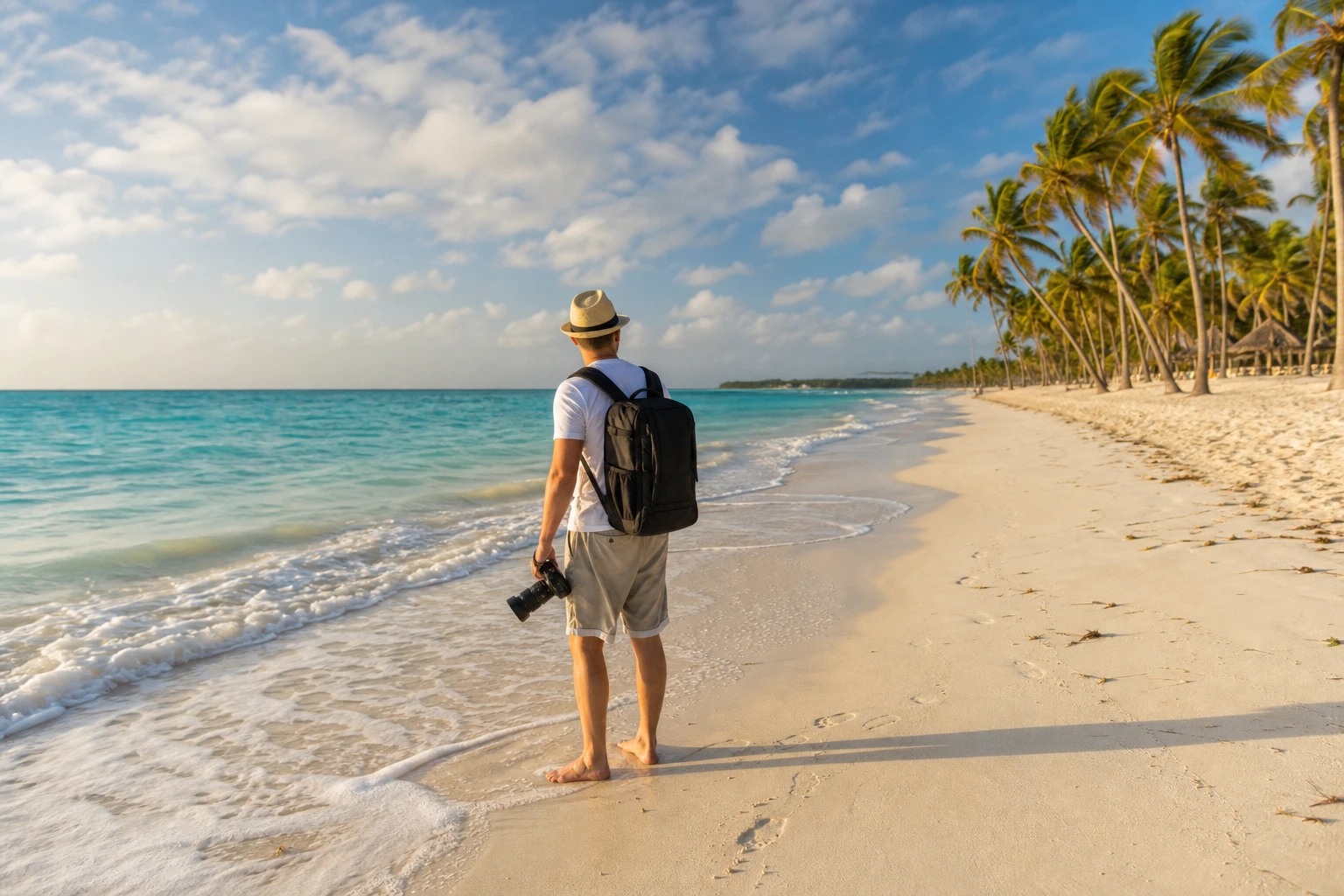
Playa Bávaro is the practical first choice for travelers staying in the main resort-beach area. Its broad coastal setting works for wide vacation portraits, walking shots, and frames that use the open beach as negative space. Easy access from beachfront hotels also makes it possible to watch the light and step outside when conditions look promising instead of committing to a long transfer.
The tradeoff is visual polish rather than isolation. Bávaro is strongly resort-oriented, so photographers should compose deliberately around hotel activity and other beach users. Move closer to your subject, lower the camera toward the sand, or use the shoreline as a leading line. A wider Bavaro travel guide can help visitors understand the surrounding resort district before building a morning photo route.
For portraits, expose for faces rather than the brightest patch of water. A small amount of fill light can help when the sun sits behind the subject. Smartphone users can tap and hold on the face to lock focus and exposure, then reduce brightness slightly if the sky loses detail. Keep the horizon level unless a deliberate tilt is central to the composition.
2. Playa Macao for surf, movement, and a natural backdrop
Playa Macao is the stronger choice when movement matters more than calm water. The beach is promoted for its natural setting and surfing, while swells and trade winds give the scene visible energy. Photograph waves at a faster shutter speed to freeze spray, or use a slower exposure from a secure position to soften the water. Keep cameras protected when wind carries salt mist across the beach.

Macao should not be treated as the default calm-water swimming location. Watch the water before placing a subject near the surf, and do not turn your back on active waves while concentrating on the camera. A Macao Beach Punta Cana guide is useful for travelers who want to devote more time to the beach rather than treating it as a single photo stop.
Late-afternoon light can emphasize surface texture, footprints, and spray, although the exact result depends on clouds and weather. Try one wide frame that establishes the beach, one medium portrait with the surf behind the subject, and one detail image of foam, sand, or equipment. That simple sequence tells a fuller story than twenty nearly identical horizon photographs.
3. Playa Juanillo for calm turquoise-water compositions
Playa Juanillo suits photographers seeking calm turquoise water and a polished beach composition. It provides a useful contrast to Macao’s wind and surf. Clean color blocks work especially well here: pale sand in the foreground, blue-green water through the center, and sky above. Portrait clothing in white, coral, yellow, or deep blue can remain distinct against that palette without overwhelming the scene.
Check current access arrangements before traveling to Juanillo, including any venue conditions that could apply to the area you plan to use. Public-access rules, spending requirements, parking, and prices should not be assumed. The Juanillo Beach Punta Cana guide offers a more focused planning companion for visitors building a longer Cap Cana outing.
When the water is calm, reflections can add depth to low-angle portraits. Place the camera near the wet sand but outside the reach of incoming water. A clear protective pouch is sensible for phones, while interchangeable-lens cameras benefit from changing lenses before reaching the beach. Fine sand has an alarming talent for finding every open camera compartment.

Buggy Tour in Punta Cana with Stops at the Beach and a Cave
Nature and Off-Road Adventure Tour Travelers will drive their own buggy along dirt trails, crossing muddy paths, hil...

Punta Cana: Los Haitises Park, Montana, Rancho Salto Yanigua
Experience the best Dominican Republic excursion with this 3-in-1 full-day tour! Visit Los Haitises National Park, Y...

Half Day Dominican Republic Cultural Tour : Small Group
It is the best way for travelers to get to know the Dominican Republic by sharing with the people who live in the co...
4. Hoyo Azul for a change from coastal photography
Hoyo Azul earns a place in a Punta Cana photo itinerary because it changes the setting completely after several beach sessions. The Dominican Republic’s tourism authority identifies it as a Punta Cana highlight. Use it as the inland chapter of the trip, particularly when shoreline conditions are less photogenic or when an album needs more variety than sand-and-sea portraits.
Current opening times, prices, booking procedures, and mobility details can change, so review the selected admission or excursion information before departure. The Hoyo Azul Punta Cana guide is the most useful internal planning resource for travelers deciding how this stop fits into a larger day. Avoid building a tightly timed itinerary until the entry arrangements and transportation are settled.
Nature settings often contain a wider brightness range than open beaches. Expose carefully for the brightest water or foliage, then lift facial shadows during editing if needed. A polarizing filter can control some reflections, but rotate it slowly and watch the effect through the viewfinder. Removing every reflection can make water look flat rather than clear.
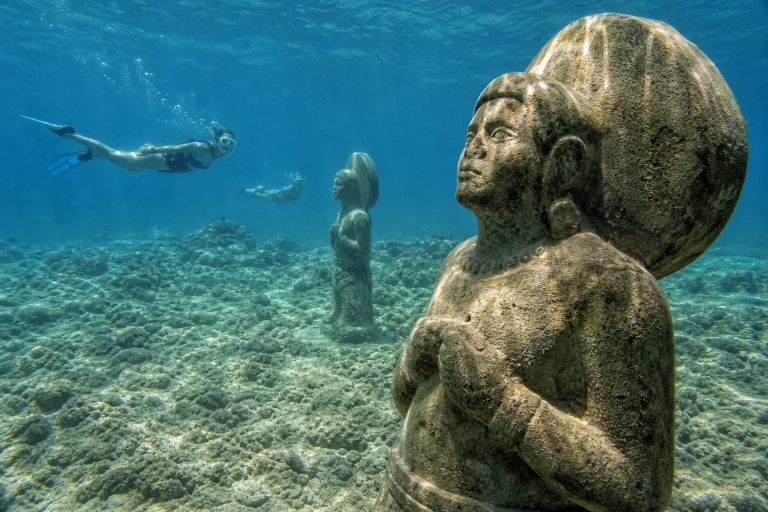
5. Ojos Indígenas for a planned reserve visit
Ojos Indígenas Ecological Reserve is a planned nature visit rather than a spontaneous roadside photo stop. The operator estimates about two hours and 45 minutes for the experience. Visitor guidance lists reserve hours of 9:00 a.m. to 4:30 p.m., with ticket sales ending at 3:00 p.m. and last entry at 3:30 p.m. Confirm the current schedule before going because operational details can change.

Pricing depends on the visitor category. Operator materials have listed US$50 for external visitors, while separate information has shown US$40 for guests of The Westin Puntacana and Four Points by Sheraton Puntacana Village. The access guidance specifies credit-card-only payment. Confirm the rate and eligibility that apply to your visit before arrival rather than relying on an older screenshot or social post.
Personal vacation photographs and organized commercial production are not the same type of access. Reserve guidance says commercial photo sessions and social-media videos require a separate inquiry, so do not assume an ordinary entry ticket covers a sponsored shoot, professional campaign, or organized content session. Travelers planning a standard visit can consult the Indigenous Eyes Ecological Reserve guide for a fuller look at the experience.
6. Marina Cap Cana for lines, reflections, and evening variety
Marina Cap Cana adds structured lines and a developed waterfront atmosphere to a collection dominated by beaches and natural settings. The location is specifically identified among Punta Cana’s notable photo locations. Look for repeating shapes, reflections, railings, and open-water backgrounds. A tighter focal length can simplify a busy marina scene by isolating a person or architectural detail from surrounding activity.
The marina pairs naturally with Juanillo or another Cap Cana stop, reducing the need to cross the destination several times in one day. The Cap Cana travel guide can help organize these nearby subjects into a coherent route. If planning evening photographs, arrange the return ride before the session begins so transportation does not become an improvised decision after dark.
Blue-hour images work best when the camera is steady. Use a small tripod only where it does not obstruct pedestrians or operations, and ask permission before setting up substantial equipment. Smartphones can often handle the scene with night mode, but hold the device still until the exposure finishes. Take one bright frame for people and one darker frame that preserves the sky.
Still comparing Punta Cana Photo Spots And Scenic Excursions?
Ask for tour ideas, hotel suggestions, or a simple trip plan that combines both.
Trip Helper
7. Saona Island for an excursion-day photo story
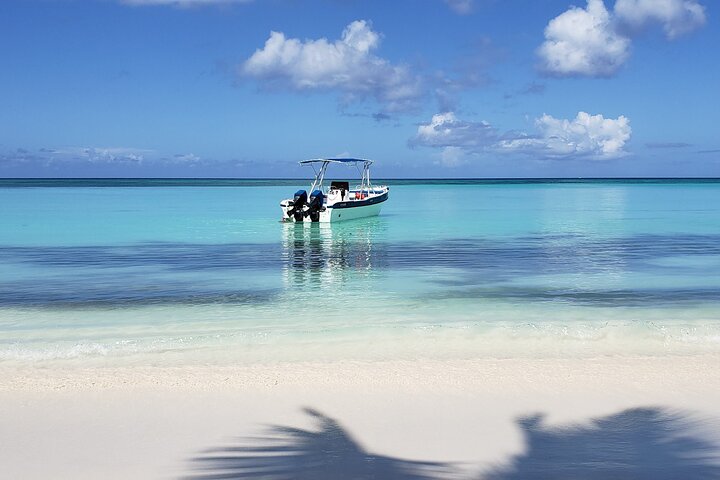
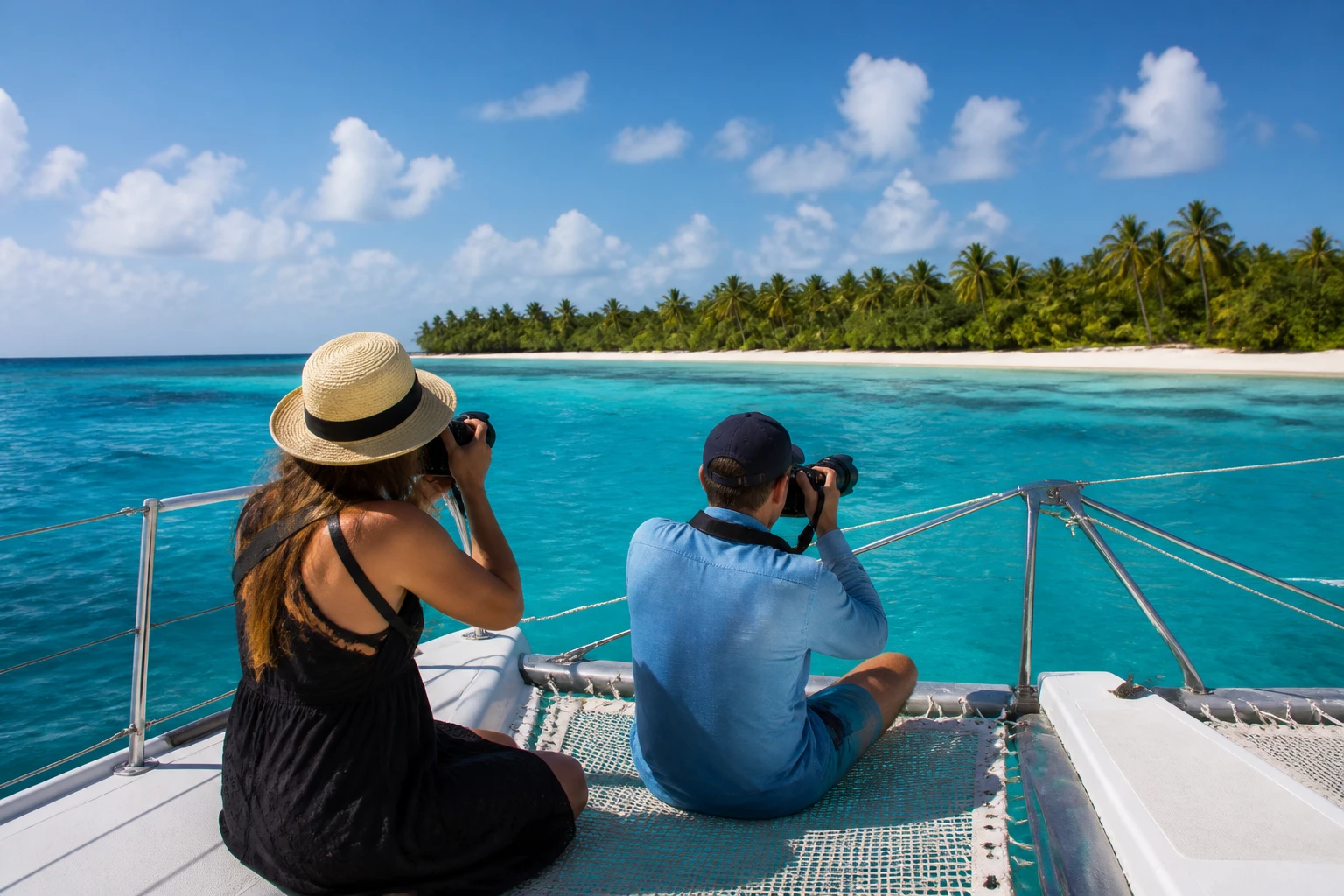
Saona Island is the most ambitious option on this list. Tourism material presents it in the context of catamaran excursions, so it belongs in a full excursion-day plan rather than an hour between local beach visits. The journey creates a broader visual story, including the boat experience and island setting, but it also makes photography dependent on tour logistics, weather, and sea conditions.
Choose a tour by comparing departure arrangements, time allocation, group format, and the specific inclusions that matter to you. Prices and accessibility differ by operator and package. The Saona Island day trip from Punta Cana guide provides useful context, while a comparison of the best Punta Cana boat tours can help travelers decide if a catamaran-based day matches their schedule.
Carry only equipment you can protect and manage during boarding. A waterproof phone case, dry bag, lens cloth, spare battery, and compact camera strap are more useful than an overloaded bag. Keep one camera ready for quick photographs while the rest of the equipment stays sealed. Salt spray should be blotted gently rather than rubbed across a lens.
How to plan the best light without overloading your day
Use sunrise and late afternoon as planning windows, not promises of empty beaches or dramatic color. Date, cloud cover, weather, and local activity all affect the result. Check date-specific sunrise and sunset information shortly before the session. Ojos Indígenas needs an earlier slot because its listed last entry is 3:30 p.m.; save the later light for a beach or marina location.
- Start with a convenient beach near your accommodation when the day’s light looks promising.
- Use the middle of the day for transfers, lunch, scouting, or a scheduled attraction.
- Carry a second location that offers a different background rather than another similar beach.
- Return to a beach or marina for late-afternoon light if weather and transportation allow.
- Back up photographs at the hotel before the next excursion day.
Avoid scheduling Macao, Bávaro, Cap Cana, and an inland attraction as a rapid sequence. Punta Cana’s photo locations are spread across different areas, and rushing leaves little room for weather changes or careful composition. Two strong locations usually produce a better set of photographs than five hurried check-ins. A one-day Punta Cana itinerary can provide a useful framework when photography must share time with other activities.
Transportation for beaches, Cap Cana, and early sessions
Punta Cana International Airport has on-site rental-car services and taxis. For an itinerary spread across resort beaches, Macao, and Cap Cana, a prearranged taxi, driver, hotel transfer, or rental car is more practical than using the bus connection toward Santo Domingo as local sightseeing transport. Travelers comparing options can use the guide to getting around Punta Cana without a car to shape a realistic route.
Arrange transportation in advance for pre-dawn departures, remote beach visits, and late returns. Current government safety guidance advises travelers to avoid unregulated or street-hailed taxis and use hotel-recommended or well-known providers. The same guidance warns that public buses and guaguas do not meet U.S. safety standards. Share the route with your driver and agree on the pickup location before leaving the vehicle.
Rental cars offer flexibility, but they also place navigation, parking, and equipment security in your hands. Do not leave visible camera bags in an unattended vehicle. If hiring a driver, explain that the trip includes photo stops rather than simple point-to-point transportation. That helps everyone understand why a stop could last longer than a standard drop-off.
Buggy Tour in Punta Cana with Stops at the Beach and a Cave
Nature and Off-Road Adventure Tour Travelers will drive their own buggy along dirt trails, crossing muddy paths, hil...
Punta Cana: Los Haitises Park, Montana, Rancho Salto Yanigua
Experience the best Dominican Republic excursion with this 3-in-1 full-day tour! Visit Los Haitises National Park, Y...
Half Day Dominican Republic Cultural Tour : Small Group
It is the best way for travelers to get to know the Dominican Republic by sharing with the people who live in the co...
Sargassum, storms, and a flexible backup plan
Beach conditions can change quickly. On July 18, 2026, the Dominican Republic’s Environment Ministry announced an environmental operation in the eastern region, including Punta Cana, in response to a massive sargassum presence. This does not describe every beach on every day, but it means photographers should check local conditions close to departure rather than assuming a clear shoreline and transparent water.
Keep Hoyo Azul, Ojos Indígenas, or Marina Cap Cana available as a non-beach alternative when seaweed affects the composition you planned. Ask your accommodation about the immediate shoreline and inspect conditions before paying for a distant transfer. Sargassum can vary by location and date, so a disappointing morning at one beach does not define every possible setting.
The Caribbean hurricane season normally runs from June through November. Travelers visiting during this period should leave room to move a boat excursion or outdoor session when forecasts and sea conditions deteriorate. The Punta Cana weather by month guide can help with broader seasonal planning, but short-range forecasts remain more useful for deciding which camera gear and location to choose on a specific day.
A compact packing list for Punta Cana photography
- Phone or camera with enough free storage for a full day
- Waterproof phone pouch or dry bag for boats and beaches
- Lens cloths for spray, humidity, and fingerprints
- Spare battery or compact power bank
- Sun protection and drinking water
- Simple clothing colors that remain distinct against sand, water, and greenery
Pack for the location rather than carrying every lens you own. A wide or standard lens covers most landscapes and environmental portraits, while a short telephoto helps simplify busy resort or marina backgrounds. Leave drones out of the plan unless all current aviation, property, reserve, and operator permissions have been confirmed. Never fly around people, boats, wildlife, or controlled areas based on assumptions.
Accessibility and professional-shoot considerations
Do not assume that sand beaches, nature reserves, cenote settings, or excursion boats can accommodate every mobility need. Reliable attraction-by-attraction specifications are not consistently published for these locations. Confirm step-free routes, boarding assistance, suitable transport, rest areas, and restroom access with the relevant hotel, reserve, venue, or excursion operator before booking.
Professional equipment can also change the nature of a visit. A couple taking phone portraits is different from a crew using lights, tripods, wardrobe changes, or sponsored video. Ojos Indígenas specifically separates commercial photography and social-media video from ordinary entry. Other managed properties can have their own rules, so secure the appropriate permission before organizing a formal shoot.
Build a photo plan around contrast, not quantity
The strongest Punta Cana photo plan uses contrast. Choose Bávaro for convenience, Macao for active surf, or Juanillo for calm turquoise water. Then add Hoyo Azul, Ojos Indígenas, or Marina Cap Cana to change the visual rhythm. Saona Island suits travelers willing to dedicate an excursion day to the experience. Each choice tells a different version of the destination.
Keep the schedule flexible, confirm access details for managed locations, and arrange dependable transportation before early or late sessions. Check shoreline and weather conditions near departure, then commit to the setting that looks best that day. One thoughtfully photographed beach and one contrasting nature or marina stop will usually create a richer album than a rushed circuit of every landmark.
Frequently asked questions
What is the best beach in Punta Cana for photos?
The best beach depends on the desired style. Playa Bávaro offers convenient resort-beach scenery, Playa Macao provides surf and a more natural setting, and Playa Juanillo is the stronger option for calm turquoise-water compositions.
Is Playa Macao good for calm-water photographs?
Playa Macao is better known for surf, swells, and trade winds than consistently calm water. Choose it for movement and coastal energy, while keeping a safer distance from active waves during portrait sessions.
How much time should I allow for Ojos Indígenas?
Allow about two hours and 45 minutes for the Ojos Indígenas experience. Current visitor guidance should be checked before arrival, especially for the operating schedule, last-entry cutoff, applicable rate, and visitor category.
Can I visit Saona Island as a quick photo stop?
No, Saona Island is best treated as an excursion-day photography opportunity. Catamaran and boat logistics, weather, group format, and operator schedules make it a much larger commitment than a local beach visit.
Does sargassum affect Punta Cana beach photography?
Sargassum can affect shoreline appearance, and conditions vary by beach and date. Check locally shortly before departure and keep Hoyo Azul, Ojos Indígenas, or Marina Cap Cana available as an alternative setting.
Are Punta Cana photo spots wheelchair accessible?
Accessibility must be confirmed for each location and activity. Sand, natural paths, reserve terrain, and boat boarding can create different obstacles, and reliable specifications are not consistently available across the listed sites.
Saona Island Day Trip From Punta Cana with Lunch and Open Bar
Explore the remarkable Altos de Chavon and dig your toes in the sand of Saona Island during this full-day excursion from Punta Cana, available every W...
Punta Cana Buggy or ATV Tour with Macao Beach, Cave and Tastings
(We'll pick you up at your hotel) take you on an incredible experience driving your own buggy to a beautiful beach...
Punta Cana Scape Park and Blue Hole Full Day Admission Ticket
This world of sensations offers everything from thrilling and adrenaline packed adventures to smooth and educational...