Indigenous Eyes Ecological Reserve Guide
Step from Punta Cana’s bright beach buzz into a green hush. At Indigenous Eyes, you walk shaded boardwalks through a 1,500-acre reserve where iguanas rustle in the brush and clear lagoons flash through the trees. The route stays mostly flat, so you can focus on birdsong, spring water, and the next swim stop instead of your feet. A few smart choices here can turn a simple outing into your best half-day on the coast.
Key Takeaways
- Indigenous Eyes is a 1,500-acre subtropical reserve in Punta Cana with shaded trails, 500+ plant species, wildlife spotting, and 12 freshwater lagoons.
- It sits inside Puntacana Resort & Club, about 3 miles south of downtown, with access through resort gates and scheduled entry slots.
- Plan for a 2- to 3-hour visit; hours are typically 9:00 a.m. to 4:30 p.m., with common starts around 9:30 and 2:00.
- General admission is usually about $50, though some resort guests may receive free entry and shuttle service.
- Trails are mostly flat and shaded; only some lagoons allow swimming, so confirm access and bring a swimsuit, towel, water shoes, and reef-safe sunscreen.

Punta Cana Natural Pool and Indigenous Eyes Eco Tour
Immerse yourself in the natural beauty of Punta Cana with this small-group eco tour that combines enjoying at the natural pool near Playa Blanca and a...
What Is Indigenous Eyes Ecological Reserve?

If you picture Punta Cana as all beaches and big resorts, Indigenous Eyes Ecological Reserve quietly changes the story.
Here, you trade pool decks for a 1,500-acre subtropical landscape with more than 500 plant species, shaded trails, and guided wildlife spotting. The heart of Indigenous Eyes Ecological Park is a chain of freshwater springs that feed small lagoons, some open for a cool swim or snorkel. You’ll hear birds, see glossy leaves, and feel the air turn softer near the water. Visits usually run in set morning or afternoon slots and take about two to three hours. Admission is around $50, though some resort guests skip the fee and even get a shuttle. Not bad for a break from beach-chair duty on busy vacation days. Guided visits also highlight conservation work like the beekeeping project and protection efforts for native species such as Ridgways Hawks and Rhinoceros Iguanas.
Where Is Indigenous Eyes in Punta Cana?
Finding Indigenous Eyes is easier once you stop looking in the busy center of Punta Cana and aim for the quieter Puntacana Resort & Club area instead. You’ll find this Ecological Reserve in Punta Cana 23000, about 3 miles south of downtown, tucked behind resort access roads rather than streets. That shift matters. You’re not pulling up beside souvenir shops and traffic. You’re heading into a greener pocket where palms rustle, birds cut through the heat, and the route feels calmer with every turn. As noted in the Cap Cana Travel Guide, this part of the region rewards travelers who venture beyond the main tourist strips. Most visitors enter through the resort area with a $50 fee, though some community hotels include free admission and a shuttle. Since visits follow entry slots, simply treat the reserve like a destination with a gate, not a roadside stop.
What Time Does Indigenous Eyes Open?
Start the day early, because Indigenous Eyes Ecological Reserve is scheduled to open at 9:00 a.m. and operate until 4:30 p.m.
If you’re planning your visit in Punta Cana, aim for the same general window as your entry slot. The reserve usually runs two daily options, with starts around 9:30 a.m. and 2:00 p.m. A walk here often takes two to three hours, enough time for shaded trails, quiet lagoons, and the snap of leaves under your shoes. Since hours and schedules can change, check the official website before you go. Give yourself extra local travel time inside Cana traffic and through Puntacana Resort & Club, so you won’t arrive breathless or miss the morning birdsong. A buffer keeps the day smooth and easy. To plan the most comfortable visit, review a Punta Cana Weather Guide before choosing between the morning and afternoon entry times.
How Much Does Indigenous Eyes Cost?
You’ll usually pay $50 per person to enter Indigenous Eyes, and you’ll book that visit for the 9:30 a.m. or 2:00 p.m. time slot. If you’re staying at a partner hotel like The Westin Puntacana Resort & Club or Four Points by Sheraton, you might get free admission and a free shuttle, which is a nice little bonus. You’ll also see tour packages with different total prices, but the park entry still centers on that $50 fee, so check the official site before you book since prices and schedules can change. For first-time travelers, it’s smart to confirm transportation and arrival details in advance so your visit goes smoothly.
Punta Cana Natural Pool and Indigenous Eyes Eco Tour
Immerse yourself in the natural beauty of Punta Cana with this small-group eco tour that combines enjoying at the na...

Punta Cana Buggy Tour + Macao Beach + Cave Swim + Organic Tasting
(We'll pick you up at your hotel) take you on an incredible experience driving your own buggy to a beautiful beach...

Half Day Dominican Republic Cultural Tour : Small Group
It is the best way for travelers to get to know the Dominican Republic by sharing with the people who live in the co...
General Admission Price
While Indigenous Eyes feels worlds away from the busy beach scene, general admission usually costs about $50 per person for a day visit. That price gets you into the Reserve inside the Punta Cana Resort & Club area, about three miles south of downtown Punta Cana. You can plan your visit around the usual daily entry times, with tours commonly listed at 9:30 a.m. and 2 p.m. The fee feels fair when you imagine clear lagoons, shaded trails, birdsong, and that pleasant moment when your flip-flops finally stop collecting sand. For many first-time visitors, the reserve is a worthwhile change of pace from Punta Cana’s all-inclusive beach routine. Still, prices and schedules can shift, so you should check the official site before booking. A confirmation saves surprises and helps you choose the time slot that fits your day, lunch plans, and energy level.
Resort Guest Access
If you’re staying at the right Punta Cana resort, that $50 entry fee may disappear before you even lace up your walking shoes. At properties like The Westin Puntacana Resort & Club and Four Points by Sheraton, you may get free admission plus a handy shuttle. The reserve sits inside the Puntacana Resort area, about three miles south of downtown Punta Cana, so where you sleep can shape how you enter. For many first-time visitors, staying in this area can make reserve access notably easier. Most visits run in two daily slots, 9:30 a.m. or 2:00 p.m., and last roughly two to two and a half hours. Schedules and perks can shift, sometimes quietly, so check the official park listing before you plan. That quick confirmation can save you money, a wasted ride, and one sweaty forehead later.
Tour Package Costs
For most visitors, Indigenous Eyes costs about $50 per person, which is a fairly neat price for a few hours of cool shade, birdsong, and those bright lagoons that look almost polished.
If you’re staying at The Westin Puntacana Resort & Club or Four Points by Sheraton, you might get in free and catch a free shuttle too. Most visits run two to two and a half hours, and common tour slots are 9:30 a.m. and 2:00 p.m. Guided packages on booking sites can cost more, especially if affiliates earn a commission, but the base reserve entry still usually points back to that $50 mark. Travelers comparing nature outings from Punta Cana often also look at Cotubanamá National Park as another protected area in the region. Hours often sit around 9:00 to 4:30. Before you book, check the website for the current fee and schedule.
When Is the Best Time to Visit Indigenous Eyes?
You’re usually best off starting early, especially if you want quieter trails and a smoother 9:30 a.m. tour before the forest fills with more footsteps. Afternoon can still work, but with temperatures often hovering around 26 to 32℃, you’ll want enough time to cool off in the freshwater lagoons and wander the shady paths for two hours or more. Since the reserve runs from 09:00 to 16:30 and hours or prices can shift, check the day’s schedule, book ahead, and don’t leave yourself racing the clock. If you’re comparing nature outings around the region, a Los Haitises day trip from Punta Cana is another popular option for seeing protected landscapes.
Still comparing Indigenous Eyes Ecological Reserve?
Ask for tour ideas, hotel suggestions, or a simple trip plan that combines both.
Trip Helper
Morning Vs Afternoon
While both time slots work, the morning usually wins if you want Indigenous Eyes at its calmest. At Indigenous Eyes Ecological Reserve, the earlier entry, often 9:30 a.m., gives you a better shot at quiet boardwalks, soft birdsong, and a swim before the biggest crowds reach the wooden-deck lagoons. If you’re visiting as a family, Punta Cana with kids planning often makes the quieter morning slot especially appealing. If you like moving without rush, morning feels easier.
The 2:00 p.m. slot still works well. You can fit other plans first, then spend the usual two to three hours on the flat, shaded trails and at the freshwater lagoons. Since only some lagoons allow swimming, the best choice is simple: book the time that lets you arrive relaxed, change easily, and reach the water without racing the clock after a rushed hotel breakfast.
Weather And Seasons
In Punta Cana, Indigenous Eyes stays warm all year, so the best time to visit usually depends less on season and more on timing. Expect partly cloudy skies and temperatures around 26 to 32°C, so you’ll want sunscreen, a hat, and water even when clouds play nice.
You’ll get the best mix of comfort and swimming if you go between 09:00 and 16:30 and give yourself two to three hours. Mornings and early afternoons feel easiest on the flat, shaded trails, and the clear waters of the cool lagoons look especially tempting then. The reserve often uses set entry slots at 9:30 a.m. and 2 p.m., so booking ahead helps you chase calmer conditions. If you’re comparing nearby activities, a Punta Cana day pass can be useful for planning how this nature stop fits into a broader beach or resort day. Before you go, check the latest reservation details for updates.
How Long Should You Spend at Indigenous Eyes?
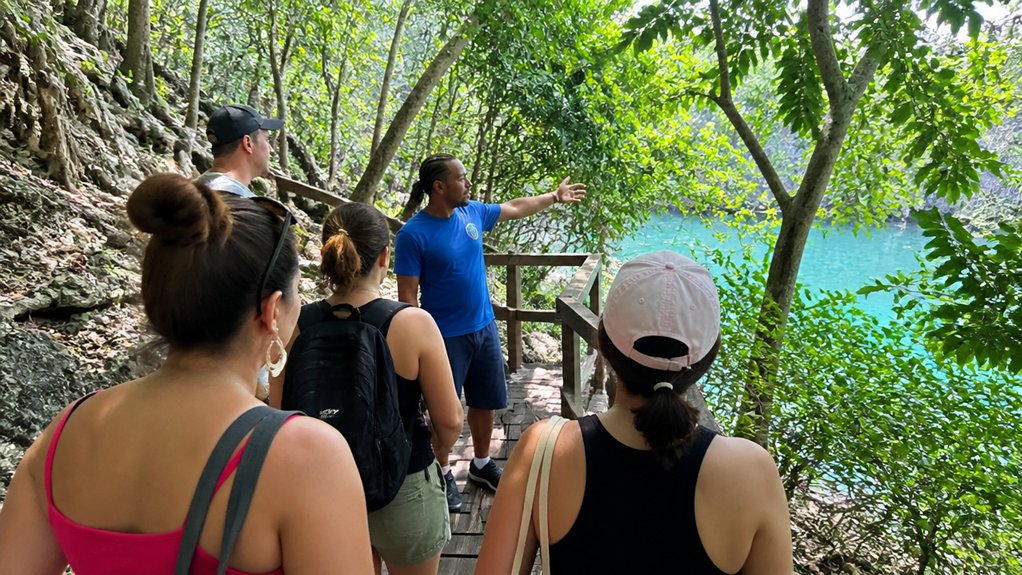
How much time feels right at Indigenous Eyes? At Indigenous Eyes Ecological Reserve, plan on 2 to 3 hours. That gives you time to wander the flat shaded trails and boardwalks, pause at the freshwater lagoons, and still move at an easy pace. If you’re aiming for a quick swim, 2 hours often works, though many visits land closer to 2.5.
You won’t swim everywhere. The Park protects around 12 lagoons, and only a few are open for dipping, so your time depends on how long you linger at the docks. As part of a Punta Cana Summer Travel Guide, this timing makes Indigenous Eyes an easy half-day stop during a warm-weather getaway. Arrive earlier within the usual 09:00 to 16:30 hours for a calmer feel. If you add wildlife spotting and relaxed stops, 3 hours feels pleasantly unhurried, not rushed, and the shade feels welcome.
How Do You Get to Indigenous Eyes?
You’ll find Indigenous Eyes Ecological Reserve in Punta Cana 23000 inside Puntacana Resort & Club, about 3 miles south of downtown, so driving there feels more like entering a quiet resort pocket than pulling up to a city park. Since access follows the reserve’s daily hours and resort entry can be time-specific, you’ll usually have an easier time with a pre-arranged transfer or tour pickup. If you’re staying at the Westin Puntacana Resort & Club or Four Points by Sheraton, you can hop on the free shuttle and save your energy for the lagoons, not the logistics. For travelers arriving by air, Punta Cana Airport transfers can make getting from the terminal to your resort area or reserve meetup point much smoother.

Private Punta Cana Airport Transfers Hotels in Dominican Republic
Why Choose Our Punta Cana Airport Transfers? Experience the perfect combination of affordability and premium service...

Punta Cana Airport Private Transfers to Hotels
VIP Luxury Transportatin Punta Cana Airport Round Trip, or One Way to anywhere Punta Cana and Uvero Alto Area. Perfe...
Punta Cana Buggy Tour + Macao Beach + Cave Swim + Organic Tasting
(We'll pick you up at your hotel) take you on an incredible experience driving your own buggy to a beautiful beach...
Driving And Location
Just south of downtown Punta Cana, Indigenous Eyes Ecological Reserve sits inside the Puntacana Resort & Club area at Punta Cana 23000, Dominican Republic, about 3 miles from the town center. If you’re driving, use the Puntacana resort access road, then follow on-site signs to the reserve entrance. Reservations are required, so don’t wing it.
- Leave downtown Punta Cana early.
- Plan around today’s 09:00 to 16:30 access hours.
- Arrive before the last entry window.
- Expect about $50 per visitor at arrival.
- Check the official listing before you go.
The drive is short, green, and easy to overthink. Let the signs guide you, keep your confirmation handy, and you’ll roll in ready for lagoons instead of logistics. Road updates can shift, especially after rainy mornings. If you’re not driving, getting around Punta Cana without a car is also possible with local transport and ride options.
Shuttle And Tour Pickup
From most Punta Cana hotels, the easiest move is to let a shuttle do the work. Most official experiences pick you up, head toward Punta Cana 23000, and drop you at Indigenous Eyes Ecological Reserve, which opens today from 9:00 to 16:30. Tours usually leave in fixed slots like 9:30 a.m. or 2:00 p.m., so your pickup time lines up with those departures.
If you stay at The Westin Puntacana Resort & Club or Four Points by Sheraton, you may score free admission and shuttle service. Otherwise, expect an entrance fee that’s often listed at $50 per person, and book ahead when you can. The reserve sits inside Puntacana Resort & Club, about three miles south of downtown, so pickup saves time for you. Cap Cana is only 10 minutes from Punta Cana International Airport, making easy arrival another advantage when planning nature outings in the area.
What Are Indigenous Eyes Trails Like?
Because the reserve stays mostly flat and shaded, the trails feel easygoing without losing their sense of discovery. In this private nature reserve, you follow well-kept paths and boardwalks under native subtropical trees. Signs point out plants and birds, so each turn gives you something new to notice. You can stroll at a relaxed pace, watch for iguanas and butterflies, and finish the walking sections in about two to three hours. The route links freshwater lagoons and quiet viewpoints, and the shade keeps the walk comfortable even when the day turns bright. It feels more like exploring than exercising, which is a trick. If you want a different kind of wildlife outing after the reserve, Monkeyland tours offer close-up encounters with friendly squirrel monkeys in several Dominican Republic destinations.
- Wear light shoes.
- Pause for bird calls.
- Read the trail signs.
- Scan sunny edges for iguanas.
- Bring water and bug spray.
Which Indigenous Eyes Lagoons Allow Swimming?
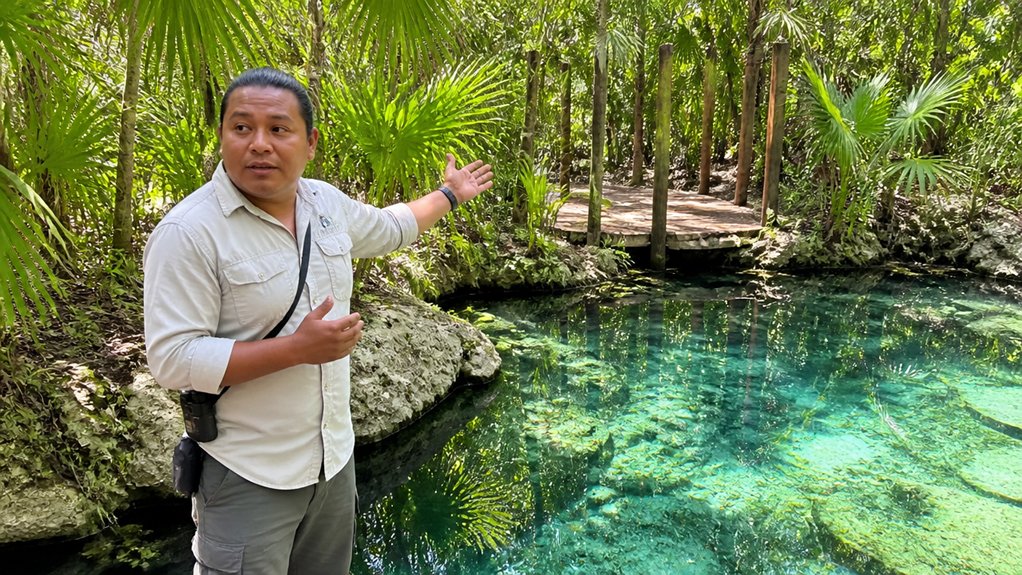
Which ones can you actually swim in? At Indigenous Eyes Ecological Reserve, you can’t jump into all 12 freshwater lagoons. Only some are open for swimming, and those tend to be smaller and shallower than dramatic cenotes like Hoyo Azul at another site. Hoyo Azul is often described as a hidden blue lagoon in Punta Cana, which makes it a useful contrast to the reserve’s gentler swim spots. You’ll usually spot wooden decks at the swim lagoons, which makes getting in easy and keeps the first step from feeling slippery or awkward. Once you’re in, the clear, cool waters make the heat disappear fast. Open access can change, though, so confirm at the entrance or with your tour operator before you set out. Give yourself two to three hours so you can wander the connected boardwalk trails, pause at the open lagoons, and still enjoy a swim without rushing.
What Wildlife Can You See at Indigenous Eyes?
What shows up once you start walking the trails at Indigenous Eyes? You enter a shady rainforest where bird calls bounce through the trees, and birdwatching quickly becomes the main event.
- Endemic birds flash through the canopy, especially around native-tree areas.
- In educational zones, you may spot the Ridgway Falcon and Rhino Iguana.
- Along flat boardwalks, watch for iguanas and other reptiles near freshwater lagoons.
- Clear lakes and forest edges draw butterflies and small wildlife in constant motion.
- Well-signed paths at Indigenous Eyes help you pause at the right spots, not just wander in circles.
Keep your eyes moving from roots to branches, because this reserve rewards patience. One minute it’s leaves and light. The next, a rare silhouette or rustle steals the scene completely. Nearby, Cotubanamá National Park protects a much larger landscape of forests, coasts, and culturally important sites in the southeast of the Dominican Republic.
Can You Visit Indigenous Eyes Without a Tour?
Yes, you can visit Indigenous Eyes on your own if you enter during an available time slot, usually around 9:30 a.m. or 2:00 p.m., instead of booking a guided eco-tour. You’ll typically pay the entrance fee for independent access, though some Puntacana resort guests may get free entry and a shuttle, so it’s smart to check access details before you go. If you choose the self-guided route, give yourself 2 to 3 hours and pack a swimsuit, towel, reef-safe sunscreen, and water shoes for the lagoon decks, where the boards can feel slick under your feet. If you’re arriving through Punta Cana, keep in mind that the airport still uses mandatory masks in terminal areas as part of its health and safety measures.
Independent Entry Options
How easy is it to visit Indigenous Eyes on your own? Quite easy. In this Indigenous Eyes Ecological Reserve Guide, you can skip the eco-tour and explore self-guided inside Puntacana Resort & Club, about 3 miles south of downtown Punta Cana. If you aren’t staying at The Westin Puntacana Resort & Club or Four Points by Sheraton, expect to pay about $50. Plan on 2 to 3 hours between 09:00 and 16:30, and bring swim gear for the freshwater lagoons. Some belong to a set of 12, clear enough to tempt cautious swimmers. After your reserve visit, Arena Gorda Beach is another Punta Cana favorite for travelers who want more time by the water.
- Walk trails at your own pace.
- Swim from wooden decks in select lagoons.
- Pack a towel and reef-safe sunscreen.
- Wear water shoes on the decking.
- Listen for birds, then jump in.
Reservations And Access
Inside Puntacana Resort & Club, access feels easy once you’ve actually booked it. In this Indigenous Eyes Ecological Reserve Guide, the key thing to know is simple: you usually need advance reservations, so don’t count on walking up and winging it. Visits often run in set slots, like 9:30 a.m. or 2 p.m., and you’ll want about two to three hours inside.
You can sometimes enter independently when rules allow, or join a guided eco-tour, which is the common option. Expect an entrance fee of about $50 per person. If you’re staying at select community hotels, including The Westin Puntacana Resort & Club or Four Points, you may get free entry and a shuttle. Still, check official booking and price details first. Schedules can change. If you’re comparing options in Punta Cana, Scape Park Punta Cana is another popular nature attraction travelers often consider alongside this reserve.
Punta Cana Natural Pool and Indigenous Eyes Eco Tour
Immerse yourself in the natural beauty of Punta Cana with this small-group eco tour that combines enjoying at the na...
Punta Cana Buggy Tour + Macao Beach + Cave Swim + Organic Tasting
(We'll pick you up at your hotel) take you on an incredible experience driving your own buggy to a beautiful beach...
Half Day Dominican Republic Cultural Tour : Small Group
It is the best way for travelers to get to know the Dominican Republic by sharing with the people who live in the co...
Self-Guided Visit Tips
While guided eco-tours are popular, you can visit Indigenous Eyes on your own and follow mostly flat, shaded trails through a 1,500-acre subtropical reserve with 12 lagoons. Book a paid entry slot, often 9:30 a.m. or 2:00 p.m., and give yourself two to three hours.
- Pack a swimsuit, towel, reef-safe sunscreen, and water shoes for decks and paths.
- Swim only where lagoons are open, then step in from wooden decks.
- Follow the signs to spot native plants, birds, and quiet iguanas.
- Bring water and check hours, usually 09:00 to 16:30, before heading out.
- Pair your reserve walk with a stunning beach later, if you want contrast.
You’ll hear birds, feel cool shade, and trade crowds for freshwater calm while still getting a small adventure.
What Does an Indigenous Eyes Tour Include?
From the moment your air-conditioned ride pulls up, the tour keeps things easy: a certified guide handles the route, your reserve entrance fee, and the flow of the day.
You’ll follow shaded trails and boardwalks through dry forest, spotting endemic birds, glossy leaves, and the quiet flash of lizards. Then comes the Cave Swim feel, with time to swim or snorkel in clear freshwater lagoons fed by the Indigenous Eyes springs. Many tours also stop at the Gavilan de la Hispaniola shrine and an apiary, where you can taste organic coffee, chocolate, and honey. Gratuities usually aren’t included, so keep small cash handy. If plans change, you can often cancel at least 24 hours ahead for a full refund without any raised eyebrows there.
Which Indigenous Eyes Tours Are Worth Booking?
Once you know the basic flow of the reserve, the real question is which tour actually earns a spot on your Punta Cana plan. For most travelers, the Indigenous Eyes Ecological Reserve Tour that wins is the one matching your pace.
- Book WildlifeSwim for the best overall bet: 3.5 hours, skip-the-line entry, pickup, strong 4.6 reviews, and real demand.
- Pick the buggy combo if you’d rather trade quiet trails for engines, cave water, and Macao Beach.
- Choose Ojos Indígenas Ecological Reserve Tour when you want structure and a possible private group, despite lower ratings.
- Try floating sound healing only if cenotes are your focus and you don’t mind paying more.
- Before booking, confirm times and rules, since prices shift and yesterday’s ticket can cool.
What Should You Pack for Indigenous Eyes?
What earns space in your daypack here? At Indigenous Eyes, pack to move easily from shaded trails to cool freshwater lagoons without a fussy reset.
| Item | Why pack it | Best moment |
|---|---|---|
| Swimsuit, towel | You can swim from wooden decks into clear lagoons | Between trail loops |
| Reef-safe sunscreen, water shoes | Protect skin and steady your steps on decks and shallow edges | Before each dip |
| Light clothes, water, hat, waterproof pouch | Stay cool in 26–32°C weather and keep phone and keys dry on a 2–3 hour visit | Guided eco-tour and lagoon stops |
Sunglasses help with wildlife spotting too. Indigenous Eyes feels easygoing, but wet boards can humble overconfident feet. A quick towel-off beats sitting damp in the shade while tree frogs keep up their small soundtrack.
What Else Can You Do Near Indigenous Eyes?
Where do you head after the last lagoon swim and one more slow look through the trees? You’ve got strong options nearby, and most fit neatly after a 2 to 3 hour reserve visit.
- Take the Higuey cultural tour for churches, street life, and history. It runs 4.5 to 7 hours from $31.
- Book a Blue Lagoon catamaran cruise for six breezy hours from $149.
- Choose WildlifeSwim in the cenotes. It lasts 3.5 hours, includes pickup, and earns 4.6 from 446 reviews.
- Try a Punta Cana Buggy Tour: ATV mud, trails, or a cave swim from $36.
- Slow down again on a Saona Island catamaran day. Eight hours, pickup, 4.4 from 4,460 reviews, from $82. A bright reset after all that shade for you.
Frequently Asked Questions
Are There Restrooms or Changing Facilities Inside the Reserve?
No, you won’t find restrooms or changing facilities inside the reserve; use facilities before entering. Accessibility Options are limited, so plan ahead, bring water, and wear swimwear under your clothes if you’ll swim there later.
Is Indigenous Eyes Suitable for Young Children or Strollers?
Yes, you’ll find it suitable for young children, thanks to paths and Family friendly terrain, but you shouldn’t expect easy stroller access everywhere; some trails stay uneven, sandy, or rooted, so a carrier works better.
Can You Bring Food and Drinks Into Indigenous Eyes?
Yes, you can usually bring sealed snacks and water, but you should confirm current Food Safety Guidelines first. You’ll need to pack out trash, avoid alcohol or glass containers, and never feed the wildlife onsite.
Are Lockers Available for Valuables While Swimming in the Lagoons?
No, you won’t find lockers for valuables while swimming, so bring only essentials, keep items with a companion, or leave them secured elsewhere. Snorkeling Gear and towels stay your responsibility, so plan ahead before visiting.
Is Drone Photography Allowed at Indigenous Eyes Ecological Reserve?
No—launching a drone there can feel like dropping a buzzing spaceship into paradise, and you shouldn’t do it. You must follow Wildlife Etiquette, protect nesting animals, and ask staff first about any special photo permissions.
Conclusion
By the time you step off the shaded boardwalk, you’ll get why Indigenous Eyes lingers in Punta Cana memories. You walk easy trails, hear birds in the palms, and watch clear lagoon water flash suddenly through the trees like a secret. Bring water shoes, sunscreen, and a swimsuit, because the best part may wait around the next bend. Maybe it’s an iguana on the path. Maybe it’s that first cool jump into spring-fed blue water.
Punta Cana Natural Pool and Indigenous Eyes Eco Tour
Immerse yourself in the natural beauty of Punta Cana with this small-group eco tour that combines enjoying at the natural pool near Playa Blanca and a...
Experiences to explore
 Explore experience ↗
Punta Cana Buggy Adventure: Jungle Trails, Caves & Beach
◷ 4 hr
What Makes This Experience Unique This is not just a ride it’s a full cultural and adventure experience. Unlike standard group tours, o
From $65.00 USD
View dates Explore experience ↗
Punta Cana Natural Pool and Indigenous Eyes Eco Tour
◷ 3 hr
Immerse yourself in the natural beauty of Punta Cana with this small-group eco tour that combines enjoying at the natural pool near Pla
See dates for Current pricing
View dates Explore experience ↗
ATV Off-Road Adventure – Jungle Trails & Hidden Beaches
◷ 2 hr 20 min
4X4 ATV MOTO QUAD.It is one of the most amazing and beautiful excursions to enjoy as a family, you will not regret it. What Bring? Comf
See dates for Current pricing
View dates