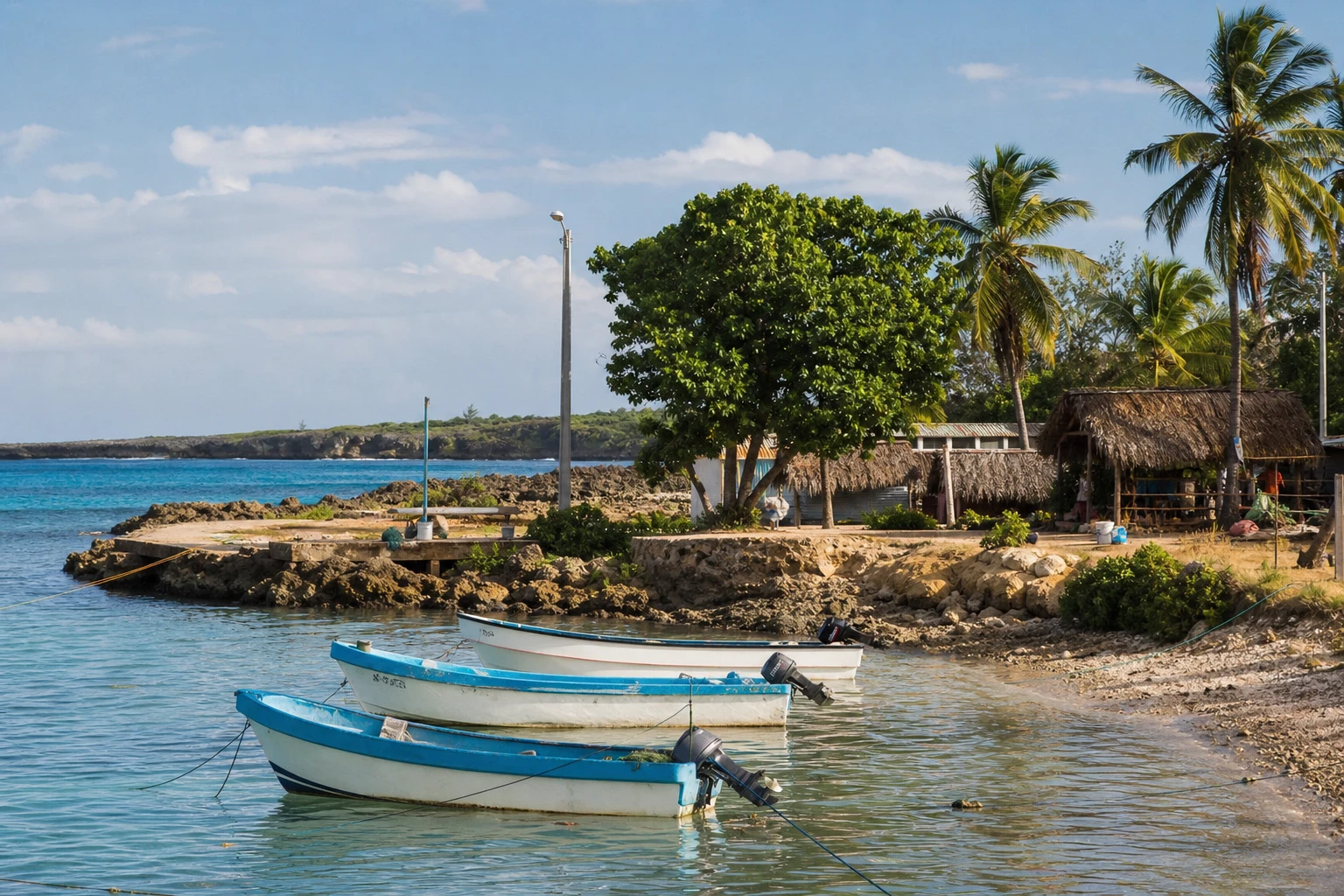
Spring brings Punta Cana warm Caribbean weather, busy resorts, and straightforward access through Punta Cana International Airport. March and April fall within the destination’s December through April peak period, while May marks the beginning of the Caribbean’s general tropical storm and hurricane season. The result is a season with two distinct personalities: early spring has stronger peak-season demand, while late spring requires more flexibility around weather.
- Book March and April accommodations and preferred activities early because they fall within peak season.
- Compare all-inclusive and room-only stays using the total trip cost, including meals, transfers, and excursions.
- Arrange airport transportation before arrival rather than relying on a street-hailed or unregulated taxi.
- Check entry rules, the Dominican Republic eTicket requirement, and current travel advisories before departure.
- Treat beach conditions as changeable and check recent sargassum reports for your specific resort area.
- Pack for tropical warmth, strong sun, air-conditioned interiors, and the possibility of rain.
Punta Cana works especially well for travelers who want a resort-oriented beach vacation with direct international access and a relatively short transfer after landing. Its main spring tradeoffs are peak-period crowds, high demand, dependence on arranged transportation outside many resorts, and beach conditions that can vary by location and day.

Private Punta Cana Airport Transfers Hotels in Dominican Republic
Why Choose Our Punta Cana Airport Transfers? Experience the perfect combination of affordability and premium service for your Punta Cana airport trans...

Private Transfer from Punta Cana Airport to Bavaro
We offer reliable airport transfers for very affordable prices safe transportation service in punta cana. private tr...

VIP Private Round-Trip Transfer from Punta Cana Airport
At HQT Punta Cana, we provide more than just a ride — we deliver a seamless, premium transportation experience fro...

Punta Cana Airport Private Transfers to Hotels
VIP Luxury Transportatin Punta Cana Airport Round Trip, or One Way to anywhere Punta Cana and Uvero Alto Area. Perfe...
What spring feels like in Punta Cana
Punta Cana stays warm throughout the year, with the official tourism board describing typical temperatures of roughly 25 to 32°C, or 77 to 90°F. Spring is therefore a tropical beach season rather than a mild shoulder season. Expect warm mornings, bright midday sun, and evenings that remain comfortable for outdoor dining and resort entertainment.
March and April overlap the destination’s peak period, which runs from December through April. Pools, popular beaches, restaurants, and organized excursions can feel busier during these months. Availability matters more than chasing a destination-wide bargain, especially when travel dates are tied to school breaks or fixed vacation windows.
May sits outside that stated peak period, but it also enters the Caribbean’s general May through November tropical storm and hurricane window. That does not mean a May trip will be stormy. It does mean travelers should keep plans flexible, monitor forecasts, and understand the change and cancellation conditions attached to flights, rooms, and excursions.
Choosing between March, April, and May
| Travel period | Seasonal context | Best planning approach |
|---|---|---|
| March | Part of the December through April peak period | Reserve the resort, transfer, and priority activities early. |
| April | Still within peak season | Expect strong demand and compare complete package costs. |
| May | Outside the stated peak period and within the general tropical storm window | Build flexibility into outdoor plans and monitor forecasts. |
The best month depends more on your priorities than on a single weather statistic. March and April suit travelers who prefer the established peak-season pattern and are comfortable planning ahead. May can suit travelers with flexible schedules who understand that weather disruptions remain possible. A detailed Punta Cana weather by month guide can help place each spring month in the broader annual cycle.
Where to stay for the trip you want
Location shapes the trip because Punta Cana is a broad resort region rather than a compact district where every beach and hotel sits within walking distance. Airport transfer estimates vary considerably across the coast. The official tourism site places Punta Cana and Cap Cana about 15 minutes from the airport, Bávaro, El Cortecito, and Arena Gorda about 30 minutes away, and Macao and Uvero Alto about 45 minutes away.

Travelers focused on a short arrival day can begin with Punta Cana or Cap Cana. Those considering the larger resort zones around Bávaro can use a Bávaro travel guide to understand that area’s beach-oriented setting. A Cap Cana travel guide is more useful for comparing the separate resort area closer to the airport. Transfer estimates are approximate, so allow for traffic, stops, and the exact location of your accommodation.
First-time visitors should choose an area only after deciding how they want to spend most days. A beach-centered stay, a self-contained resort break, and a base for frequent excursions create different transportation needs. The practical comparisons in Where to Stay in Punta Cana for First Timers can help narrow the choice without treating the entire coast as one interchangeable hotel zone.
All-inclusive resort or room-only stay
Compare the total trip cost instead of the room rate alone. An all-inclusive package can bundle many daily expenses into one booking, while a room-only stay leaves more freedom to explore restaurants and organize each activity separately. For a fair comparison, add meals, drinks, airport transportation, local rides, and excursions to the room-only estimate.
The Punta Cana All-Inclusive Resort Guide is a useful next step for travelers who value a self-contained vacation. Before booking, inspect what the selected rate actually includes. Packages at the same property can differ, and peak-season demand makes it especially important to compare cancellation terms and the complete stay rather than focusing on a headline offer.
- Meals, drinks, and any dining restrictions
- Airport transfer arrangements
- Activities or equipment included in the rate
- Room location and bed configuration
- Cancellation and date-change conditions
- Accessibility features required for the stay

Buggy Tour in Punta Cana with Stops at the Beach and a Cave
Nature and Off-Road Adventure Tour Travelers will drive their own buggy along dirt trails, crossing muddy paths, hil...

Half Day Dominican Republic Cultural Tour : Small Group
It is the best way for travelers to get to know the Dominican Republic by sharing with the people who live in the co...

Punta Cana: El Dorado Water Park Entry Ticket with Transportation
Make your vacation even more unforgettable with a day at the Caribbean's largest water park, located in Cap Cana. W...
Getting from Punta Cana airport to your resort
Punta Cana International Airport, identified by the code PUJ, is the principal gateway for the resort region. Transfers, taxis, and rental cars are among the local transportation options. For the most predictable arrival, arrange a hotel transfer or transportation from an established company before flying.

The U.S. State Department advises travelers to avoid unregulated and street-hailed taxis. It favors hotel-recommended taxis or well-known companies and notes that public buses and guaguas do not meet U.S. safety standards. Travelers who want a step-by-step comparison can consult the Punta Cana Airport to Resort Transportation Guide before choosing a transfer.
Confirm the pickup method, meeting point, flight details, and destination before departure. Shared services can involve additional stops, while private arrangements generally follow the booked itinerary. If a flight is delayed, use the contact procedure in the reservation confirmation rather than accepting an unsolicited ride outside the terminal.
Planning beach days around changing conditions
Beach conditions are not identical across the Punta Cana coast, and sargassum can change the appearance and usability of the shoreline. In July 2026, the Dominican Ministry of Environment announced a response to a major influx in the eastern region, including Punta Cana. That summer event does not predict a particular spring week, but it confirms that sargassum is a real planning factor rather than a purely cosmetic concern.

Check recent conditions for the exact hotel or beach shortly before travel. Ask how the property manages accumulation and avoid judging the whole destination by one photograph or one report. Conditions can differ by place and day. Keeping a pool day, spa visit, or inland activity available gives the schedule room to adapt.
Travelers comparing different stretches of coast can begin with the Best Beaches in Punta Cana guide. The goal is not to find a shoreline guaranteed to remain unchanged. It is to understand the available beach areas and retain enough flexibility to respond to conditions during the trip.
Building a balanced spring itinerary
A good spring plan leaves space for the resort while reserving only the activities that matter most. Peak-season demand makes early booking sensible for priority experiences, but filling every hour can turn a beach vacation into a sequence of pickup windows. Alternate structured excursion days with open beach or pool days.
- Choose the resort area and calculate the airport transfer time.
- Reserve the room and airport transportation.
- Select one or two priority excursions for a short stay.
- Keep at least one flexible block for weather or beach conditions.
- Review pickup details and cancellation terms before departure.
For a compact trip, the 4 Days in Punta Cana Itinerary offers a useful framework for balancing resort time and outings. Visitors adding water activities can also compare the Best Punta Cana Boat Tours, but departure points, pickup windows, duration, and inclusions depend on the selected excursion. Check the booking confirmation before placing another activity immediately before or after a tour.
Entry documents and pre-departure checks
Many nationalities, including U.S. citizens, can enter the Dominican Republic for tourism using a valid passport. The Dominican Republic eTicket is mandatory. Requirements depend on nationality and can change, so verify the rules that apply to every traveler before booking and again before departure.
- Check passport and entry requirements for your nationality.
- Complete the required Dominican Republic eTicket through the official process.
- Review the latest travel advisory from your government.
- Save accommodation and transfer details where they remain available offline.
- Check airline baggage rules and activity-specific restrictions.
- Review travel insurance coverage and cancellation conditions.
Entry rules and safety advisories are volatile information. Complete the final check close to departure rather than relying on notes saved months earlier. Families and groups should review each person’s documentation separately, including children, because one missing requirement can disrupt the entire arrival plan.
Still comparing Punta Cana Spring Travel Guide?
Ask for tour ideas, hotel suggestions, or a simple trip plan that combines both.
Trip Helper
Safety and transportation beyond the resort
The U.S. State Department advisory dated June 12, 2025 placed the Dominican Republic at Level 2, Exercise Increased Caution, due to crime. Advisory levels can change, so travelers should check the current version before departure. Practical guidance includes avoiding displays of wealth and using care when arranging meetings with people first encountered online, especially in secluded places.
Outside the resort, use transportation organized through the hotel or an established company. Avoid accepting an unregulated ride because it appears convenient. The guide to How to Get Around Punta Cana Without a Car provides a useful planning comparison for travelers who expect to leave their property for meals, beaches, or excursions.
Simple habits reduce avoidable problems. Carry only what you need for the outing, keep valuables out of sight, and tell a travel companion where you are going. For organized tours, follow the meeting instructions in the confirmation and verify that the vehicle or representative matches the booked provider.
Accessibility requires property-specific planning
Accessibility is limited across much of the Dominican Republic. Larger Punta Cana resorts can offer better infrastructure than other locations, but facilities and services may not match U.S. accessibility standards or remain consistent throughout a property. A room described as accessible does not automatically establish an uninterrupted step-free route to restaurants, pools, or the beach.
Before paying, obtain confirmation from the hotel and transfer operator for the features that determine whether the trip will work. Important details include step-free routes, bathroom layout, accessible-room placement, beach and pool access, vehicle lifts, and policies for wheelchairs or other mobility equipment.
Describe specific needs rather than asking only whether a property is accessible. Measurements, transfer assistance, equipment storage, and the distance between facilities can matter as much as the room category. Keep those confirmations with the reservation details during the trip.
What to pack for a Punta Cana spring vacation
Pack for sustained tropical warmth and strong sun rather than cool spring weather. Lightweight clothing, swimwear, sun protection, and comfortable footwear cover most resort days. Add a light layer for air-conditioned spaces and a compact rain layer, particularly for a May trip when the general Caribbean storm season has begun.
- Lightweight, breathable clothing
- Swimwear and a cover-up
- Sun hat, sunglasses, and sun protection
- Comfortable sandals plus secure walking shoes
- Compact rain layer or travel umbrella
- Light layer for air-conditioned rooms and vehicles
- Required medication and copies of essential travel information
- A small day bag that keeps valuables close
Activity plans should shape the final additions. Secure footwear is more useful than dress shoes on an active excursion, while an extra dry layer helps after time on the water. Check operator restrictions before packing specialized equipment, and keep medicine and essential documents in carry-on baggage.
How to manage a spring travel budget
Spring budgeting begins with the calendar. March and April are within peak season, so travelers should expect stronger demand rather than assume spring automatically means lower costs. No single destination-wide rate accurately represents Punta Cana because airfare, hotels, transfers, and tours vary by date, property, package, and group size.
Compare packages on equal terms. Add meals, drinks, transportation, and planned excursions to a room-only stay before comparing it with an all-inclusive option. Travelers prioritizing cost control can use the Punta Cana on a Budget Travel Guide to identify the trip components worth planning first.
Protect the budget by reading cancellation conditions before payment. Weather, airline disruption, or a changed excursion plan can make flexibility valuable, especially during May. Leave a small uncommitted portion of the trip budget for transportation changes or an alternative activity if beach conditions shift.
Buggy Tour in Punta Cana with Stops at the Beach and a Cave
Nature and Off-Road Adventure Tour Travelers will drive their own buggy along dirt trails, crossing muddy paths, hil...
Half Day Dominican Republic Cultural Tour : Small Group
It is the best way for travelers to get to know the Dominican Republic by sharing with the people who live in the co...
Punta Cana Airport Private Transfers to Hotels
VIP Luxury Transportatin Punta Cana Airport Round Trip, or One Way to anywhere Punta Cana and Uvero Alto Area. Perfe...
Is spring a good time to visit Punta Cana?
Spring is a strong fit for travelers seeking a warm, resort-centered Caribbean vacation with convenient airport access. March and April bring peak-season demand, so they reward early planning. May offers a different tradeoff because it falls outside the stated peak period but enters the region’s general tropical storm window.
The destination is less suitable for travelers who want to improvise every transfer, avoid resort-style tourism, or require guaranteed beach conditions. Sargassum, weather, and demand can reshape individual days. Choose the right resort area, arrange airport transportation, reserve the experiences that matter most, and preserve enough open time to adapt once you arrive.
Frequently asked questions
Is spring a good time to visit Punta Cana?
Yes, spring is a good time for a warm, resort-oriented Punta Cana vacation. March and April fall within peak season, while May sits outside that period and begins the Caribbean’s general tropical storm window.
What is the weather like in Punta Cana during spring?
Punta Cana remains warm, with year-round temperatures described at roughly 25 to 32°C, or 77 to 90°F. Rain and other disruptions are still possible, and May begins the region’s general tropical storm season.
Is Punta Cana crowded in March and April?
March and April are part of Punta Cana’s December through April peak period, so travelers should plan for strong demand at resorts and popular activities. Booking priority arrangements early is sensible.
Which airport should I use for Punta Cana?
Punta Cana International Airport, or PUJ, is the principal gateway for the resort area. Approximate drives range from about 15 minutes for Punta Cana and Cap Cana to about 45 minutes for Macao and Uvero Alto.
Should I arrange an airport transfer in advance?
Yes, a prearranged hotel transfer or service from an established company is the conservative choice. Travelers are advised to avoid unregulated and street-hailed taxis.
Is sargassum a problem in Punta Cana during spring?
Sargassum conditions cannot be predicted reliably for a specific future spring week. Accumulation varies by place and day, so check recent conditions for your resort or beach shortly before traveling.
Do I need an eTicket to enter the Dominican Republic?
Yes, the Dominican Republic eTicket is mandatory for tourism entry. Passport and other requirements vary by nationality, so check the applicable rules before booking and again before departure.
Is Punta Cana accessible for travelers with disabilities?
Accessibility is limited and inconsistent, although larger Punta Cana resorts can offer better infrastructure than many other locations. Confirm required room features, step-free routes, beach or pool access, and accessible transportation directly before booking.
Private Punta Cana Airport Transfers Hotels in Dominican Republic
Why Choose Our Punta Cana Airport Transfers? Experience the perfect combination of affordability and premium service for your Punta Cana airport trans...
VIP Private Round-Trip Transfer from Punta Cana Airport
At HQT Punta Cana, we provide more than just a ride — we deliver a seamless, premium transportation experience fro...
Punta Cana Airport Private Transfers to Hotels
VIP Luxury Transportatin Punta Cana Airport Round Trip, or One Way to anywhere Punta Cana and Uvero Alto Area. Perfe...
Private Transfer from Punta Cana Airport to Bavaro
We offer reliable airport transfers for very affordable prices safe transportation service in punta cana. private tr...